

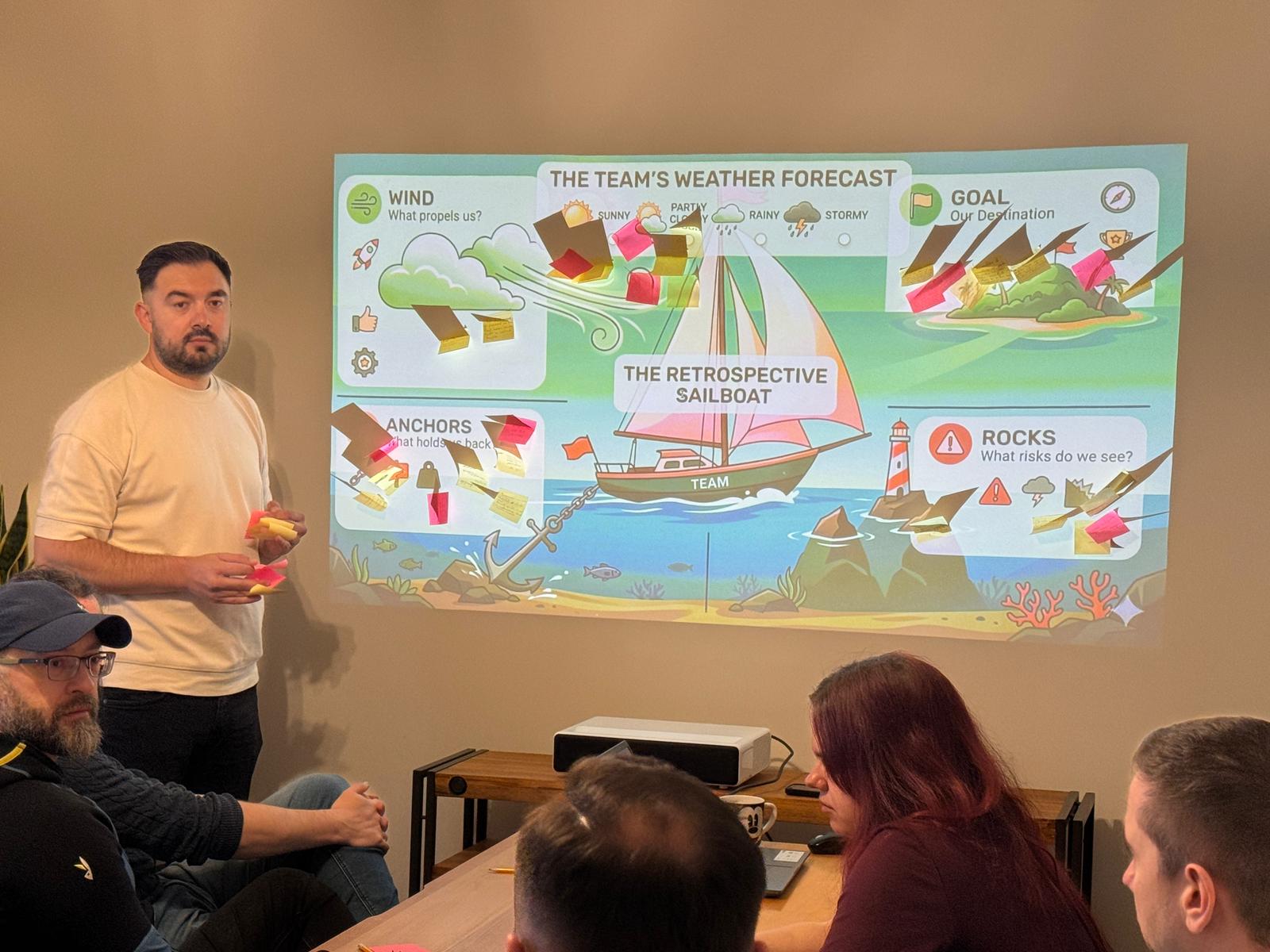
A simple, visual, and deeply human framework for taking the pulse of your team.
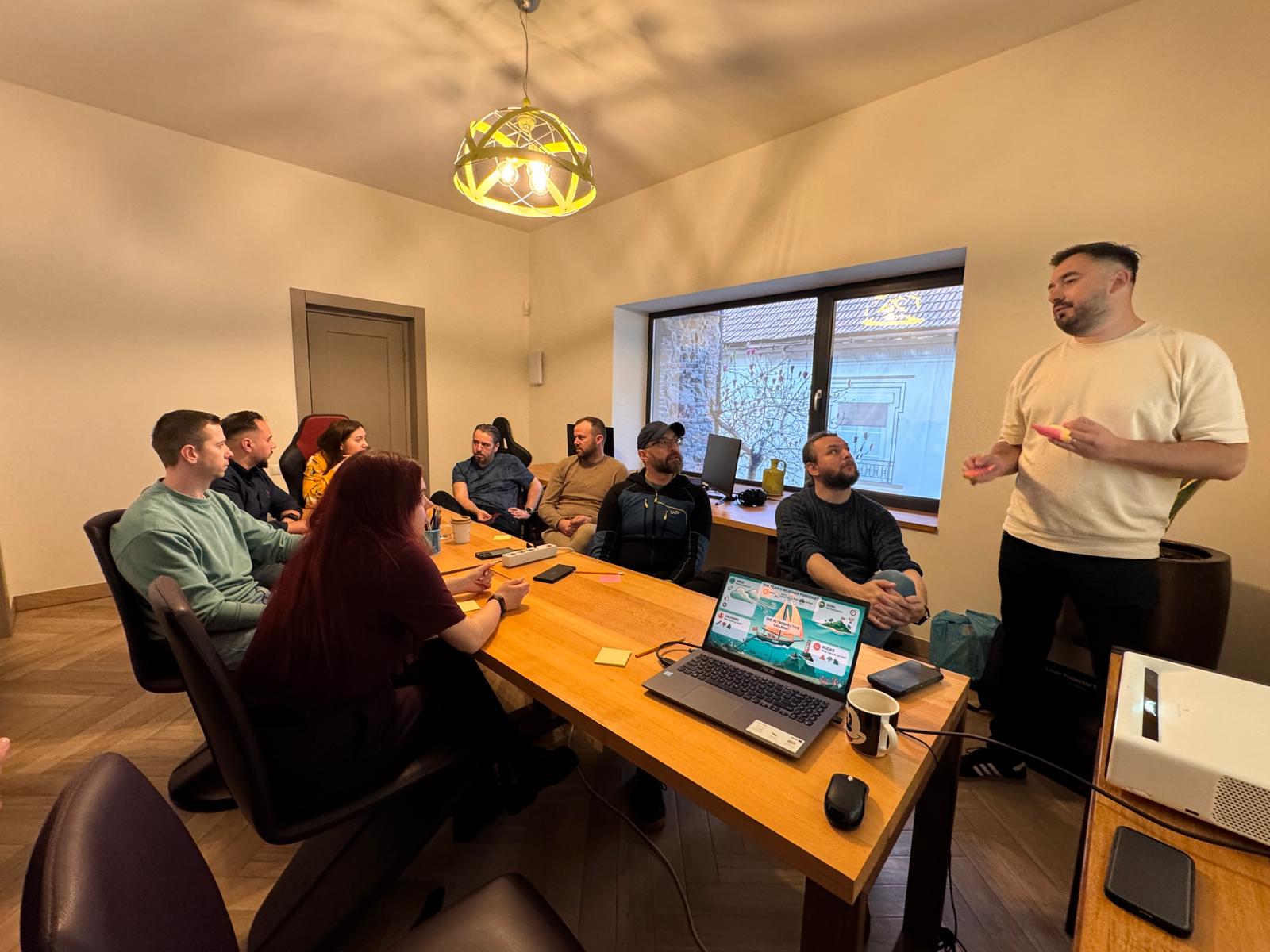
The CMO team came together for a retrospective meeting, during which the “sailboat” method was used to identify issues, challenges, and positive aspects from the recent phase of the project.
There are moments in any team’s life when the calendar moves too fast, sprints follow one another, and the real conversations—the ones about how we feel, what holds us back, and where we want to go—are always left for “next time.” The Sailboat Retrospective is exactly that “next time.” A deliberate pause. A circle where everyone’s voice matters just as much as the manager’s.
The sailboat format isn’t new, but it remains one of the most effective facilitation tools precisely because it is so easy to understand and use. You don’t need special software, elaborate presentations, or an external coach. You just need a printed image, a set of colored post-it notes, a projector, and most importantly, the courage to sit in the same room and speak honestly.
If you don’t know what’s holding you back, you can’t learn how to move forward faster.
Why the sailboat?
The sailboat metaphor works because it is universal and visceral. Everyone intuitively understands what it means to have wind in your sails, to be anchored in place, or to be approaching hidden rocks. There’s no need to translate concepts into corporate jargon—the image does the work on its own.
The team gathers in front of a projector displaying an image of a sailboat on the ocean, somewhere between waves, with a tropical island on the horizon and rocks lurking in the shadows. On this image, each team member places colored post-it notes—personal thoughts, collective observations, frustrations, and hopes—turning a simple picture into a map of the team’s reality.
The four areas of the image
Each area of the image corresponds to a type of reflection. Different post-it colors help visually separate ideas and make patterns easier to identify quickly:
Wind in the sails ⛵
What gives us energy? What’s working well? These are the things that propel us forward effective processes, successful collaborations, and small wins that deserve to be celebrated and amplified.
Anchor ⚓
What keeps us in place? These are the real impediments cumbersome processes, lack of clarity, technical or organizational blockers that consume our energy without taking us anywhere.
Rocks (Risks) 🪨
What could affect us? These are the dangers we see coming project risks, communication issues, fragile dependencies, or areas where we’re vulnerable but haven’t openly discussed them yet.
Tropical Island 🌴
Where do we want to go? These are the goals, team aspirations, and the state we want to reach both in terms of deliverables and the atmosphere and way we work together.
How the session unfolds
The Sailboat Retrospective works best when it is structured, but not rigid. Here is the rhythm we followed:
Preparation (before the session)
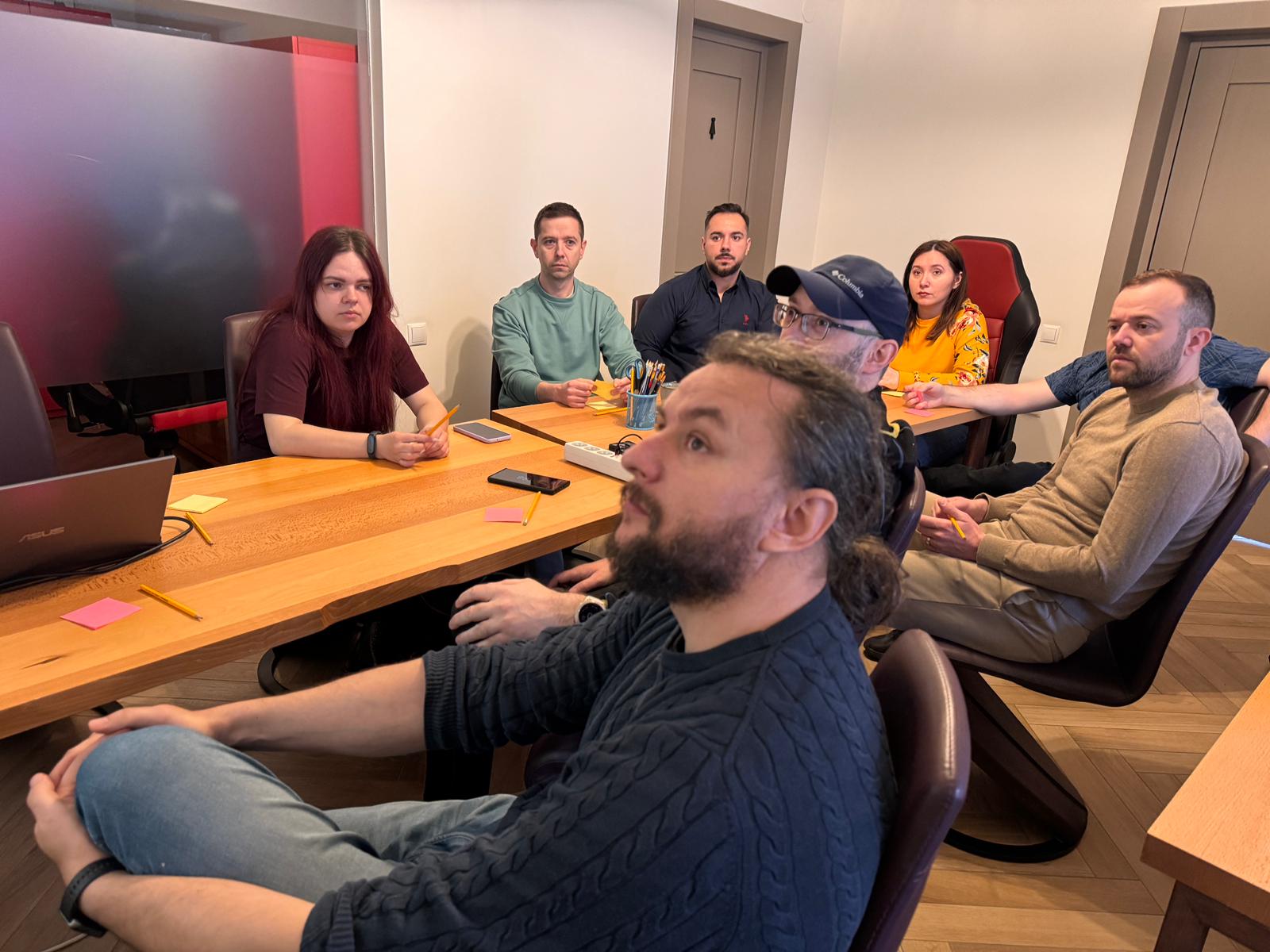
The facilitator, in our case Florin, projected the sailboat image onto the wall of the conference room. He prepared post-it notes and distributed them to the team members, with the purpose of filling them in according to the categories presented earlier. This approach—where people stand up and interact directly with paper—adds a level of energy and engagement that is hard to replicate in a digital format.
Individual completion (10–15 minutes)
Each participant received a set of post-it notes and a few minutes to write down the difficulties they encountered in achieving their objectives. In this way, every team member had the opportunity to express their own perspective.
Presentation and grouping (20–30 minutes)
Florin read each post-it aloud, grouping similar notes together. In this phase there are no wrong answers; the facilitator’s role is to ensure that every voice is heard, not to judge or filter.
Deep discussion (20–30 minutes)
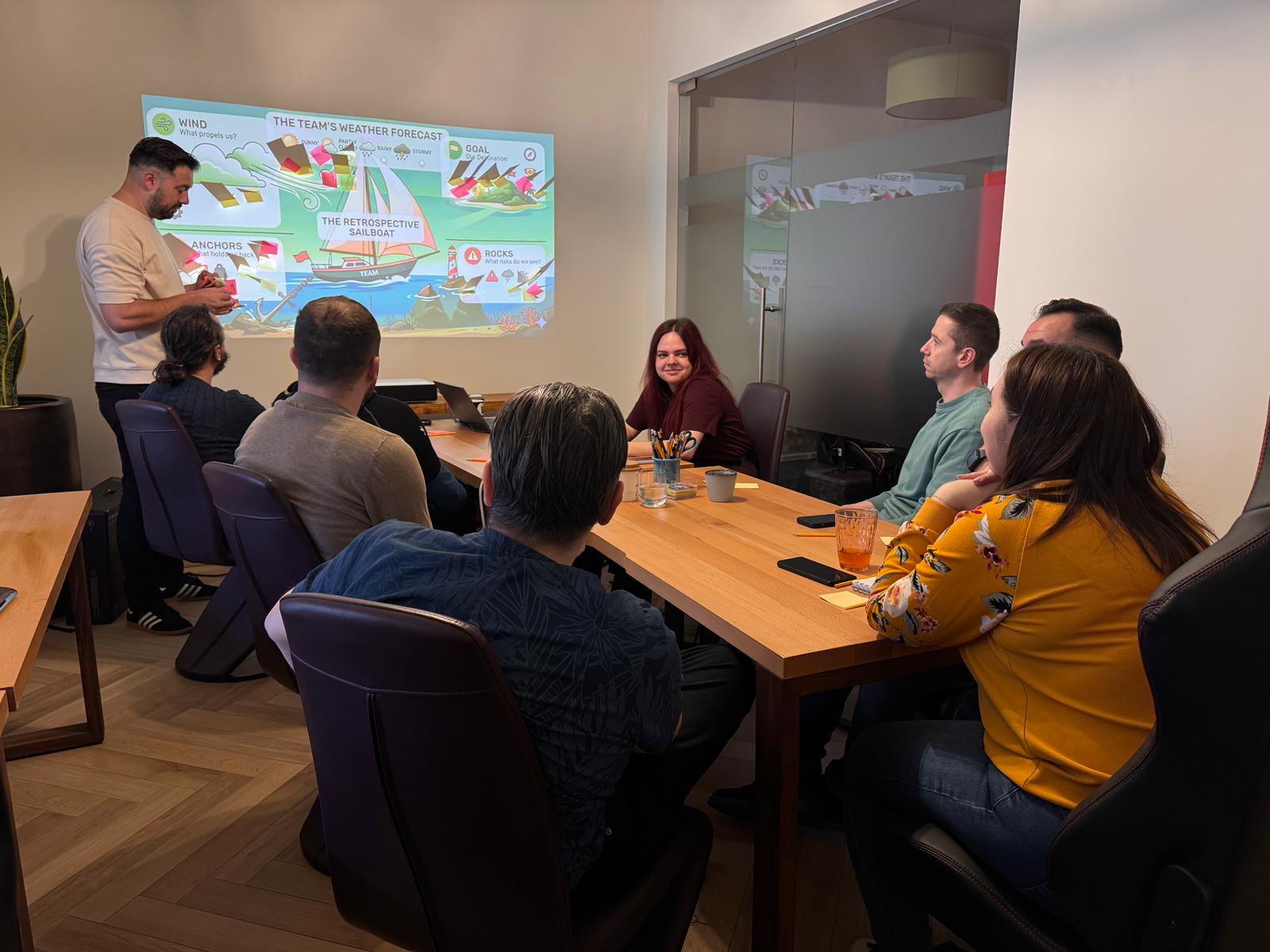
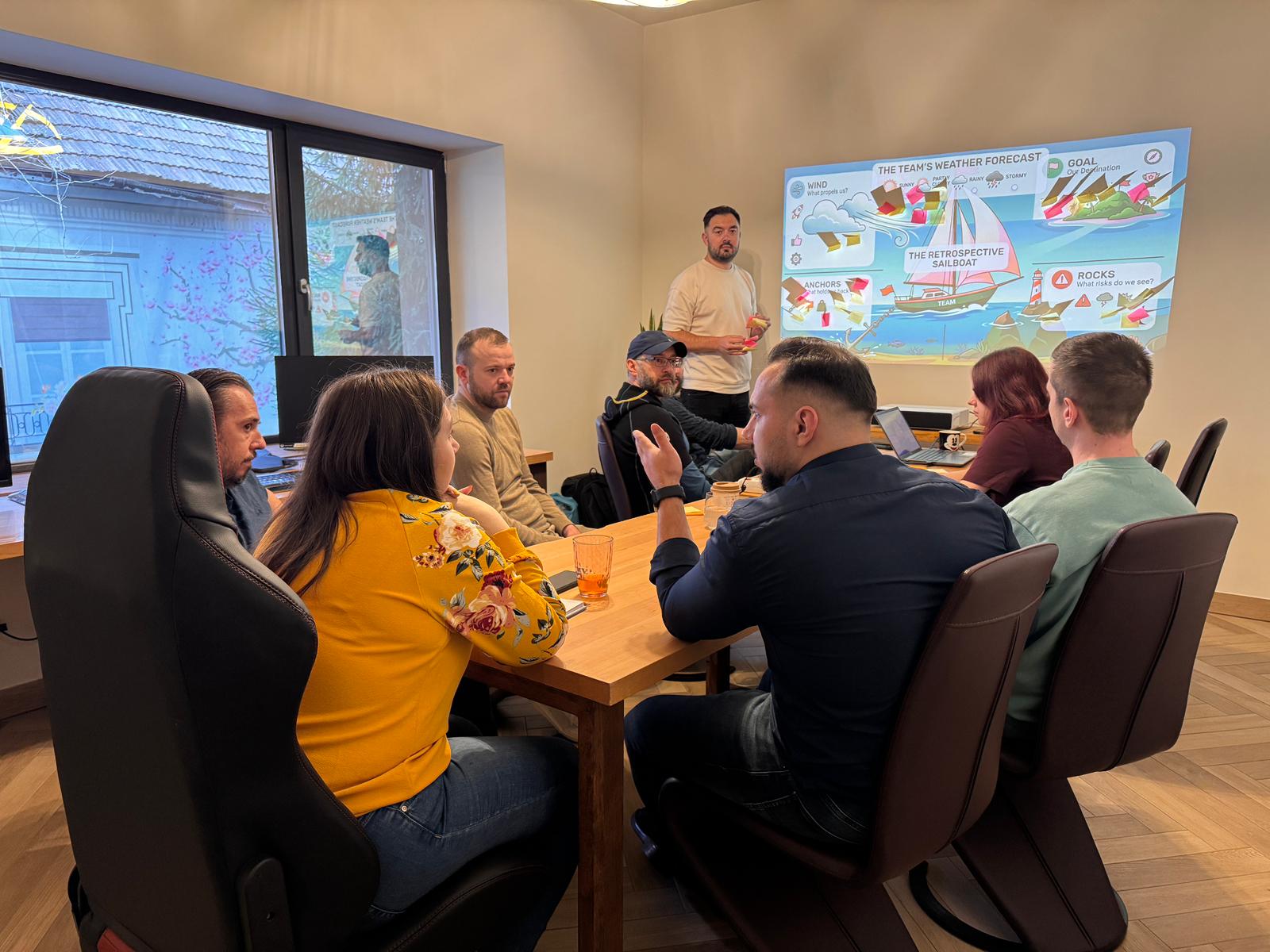
For each major theme, especially anchors and rocks, the team entered into dialogue. Not to find blame, but to understand causes and explore solutions. The most valuable conversations emerged precisely in this phase, when someone voiced something they had been thinking about for months but had not yet had the opportunity to express.
Action items (15 minutes)
No retrospective is complete without concrete commitments. Each identified action must have an owner and a deadline. Without these, the energy generated during the session dissipates within a few days.
What we do with what we discover
The real power of the retrospective does not lie in the post-it notes on the wall, but in the conversations they trigger. A post-it saying “we lack resources” can hide ten different stories—lack of time, lack of budget, lack of autonomy, or simply lack of clarity about priorities. The team’s task is to unpack and discuss these aspects.
Similarly, the “tropical island” area might initially seem utopian. People imagine concrete, achievable desires: fewer meetings, fewer responsibilities, and more free time. Once these wishes are voiced collectively, they become much easier to translate into actual practices.
Action items — after the session
Every good retrospective ends with concrete commitments, not long wish lists, but specific actions. Here are a few categories:
- A concrete action based on identified anchors
- A mitigation measure for an identified risk
- A new practice that amplifies a wind-in-the-sails strength
- A first concrete step toward the tropical island / shared goal
These types of meetings are very useful because they help the team identify both their strengths and the areas that need improvement. In addition, they contribute to the team’s shared development and evolution.
It was a very interactive meeting, with numerous exchanges of ideas. Both the aspects we manage well and those that need improvement were discussed, all in a relaxed atmosphere that encouraged open expression. In addition, in the current context, it was a good opportunity for us to see each other face to face at the office again, something that has been happening less and less frequently lately.
Today’s meeting gave us a good reason to come to the office in person, while also being interactive and relaxed. Held periodically, these types of meetings are valuable because they create the right framework for exchanging ideas and identifying both what works well in the team and what can be improved, in an open and constructive way.
The informal nature of today’s retro created a comfortable atmosphere, facilitated communication, and encouraged active participation in the discussions. In addition, several aspects that can be quickly improved were highlighted.
It is useful because it helps us identify what worked well and where we still have room for improvement.
Why it’s worth repeating?
The Sailboat Retrospective is not a one-time event; it is a ritual. Teams that practice it regularly (once per quarter or at the end of each major cycle) develop the following characteristics: a culture where problems are raised before they become crises, where successes are celebrated before they are forgotten, and where the shared direction is not assumed but transparently negotiated.
A boat does not sail itself. It is guided by people who know where the wind is blowing, where the rocks lie in wait, and where the island worth reaching can be found.